
Finding joy in recovery can begin with a surprisingly simple question. What makes you feel genuinely alive? Not distracted, numb, or temporarily removed from whatever has been weighing on you, but truly present. Maybe it’s laughing with people you love, getting completely absorbed in a hobby, feeling the rush of trying something new, or realizing that you are excited about your own future again. Those experiences may seem ordinary, but they can become an important part of building a life in recovery.
September is National Recovery Month, which gives us an opportunity to celebrate recovery while also challenging some of the assumptions surrounding it. Recovery certainly involves difficult work. There may be relationships to repair, habits to change, uncomfortable emotions to face, and new ways of living to learn. However, recovery is not supposed to make life smaller. It can also mean getting more of your life back. More connection, curiosity, laughter, hobbies, friendships, adventures, goals, and experiences that feel good because you were fully there for them.
That part of recovery deserves celebrating too.
Finding Joy in Recovery Looks Different for Everyone
There is no universal definition of a fun sober life. One person might feel most alive heading into the Idaho mountains before sunrise. Someone else may rediscover live music, working on cars, fitness, art, cooking, fishing, volunteering, traveling, or simply spending more time outdoors. For a parent, joy might look like being fully present at a child’s game. For someone else, it could be dinner with friends, pursuing a business idea, or waking up on Sunday morning and genuinely liking the life waiting for them.
The point is not to make every day exciting or to constantly search for the next thrill. It is about discovering what feels meaningful when you are actually present for it. Research available through the National Institutes of Health offers an encouraging perspective. One study found that people in prolonged recovery reported current life satisfaction, social well-being, and quality of life comparable to people without a history of problematic substance use.
That is worth paying attention to. Recovery does not have to mean accepting a duller version of life. Instead, it can create room to rediscover parts of yourself that substance use gradually pushed aside.
Recovery Month Is Also About Hope
National Recovery Month is an important reminder that recovery is possible and that people do not have to pursue it alone. The Substance Abuse and Mental Health Services Administration highlights the importance of connection, belonging, meaning, purpose, and supportive communities within recovery. It also recognizes something we see every day in behavioral healthcare. People recover in different ways, shaped by their individual needs, experiences, cultures, values, and goals.
There is room for recovery to look like your life. Treatment may be one part of it, alongside family, friendships, peer support, faith, work, recreation, community, and the interests that make you feel like yourself. As recovery progresses, life does not have to remain centered on everything you are no longer doing. Eventually, there is room for another question to emerge. What do you get to do now?
That shift can be powerful. Recovery can become less about restriction and more about possibility.
Sometimes the Natural High Comes With an Engine
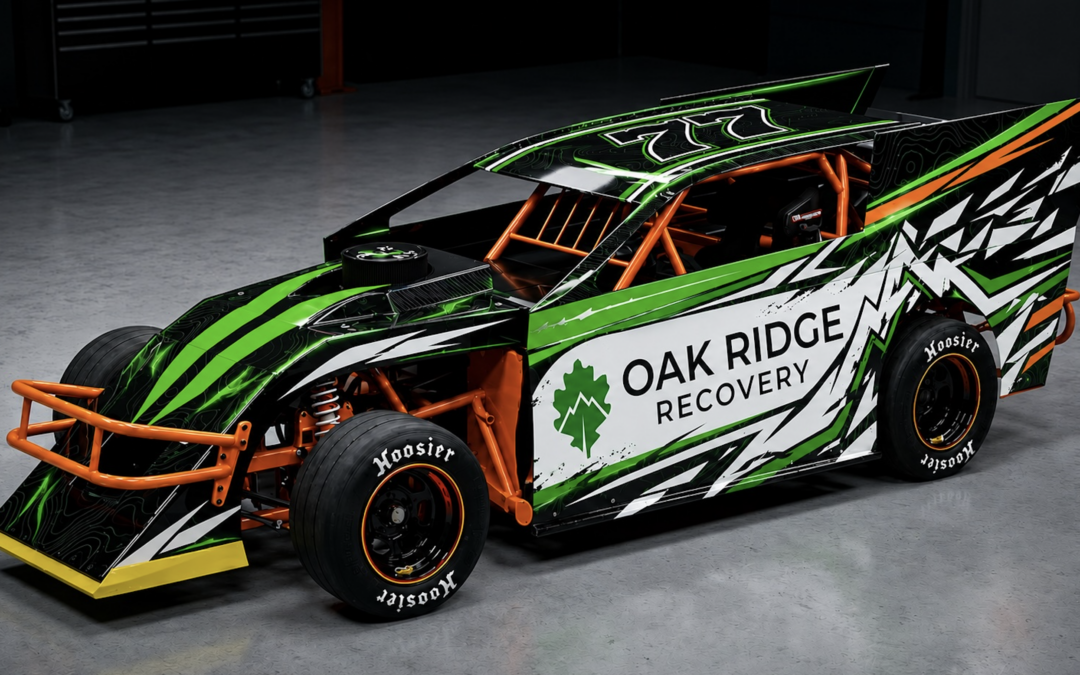
At Oak Ridge Recovery, one of the unexpected joys of this year has involved a little more horsepower than people might normally associate with behavioral healthcare. We’ve had the privilege of becoming the title sponsor for the Mini Mods racing class this season, a community built around people of all ages and backgrounds coming together through connection, momentum, and a shared passion within the local racing community.
And yes, it is fun. That is part of why we think it belongs in a conversation about recovery.
A racetrack may not be the first place someone pictures when thinking about building a healthier life. However, spend time around a local racing community and you will see many of the things that can make life richer. Drivers work toward goals and challenge themselves. Families spend time together. Teams solve problems. Friends cheer each other on. People who might have very different lives away from the track find common ground through something they genuinely enjoy.
That kind of belonging matters. NASCAR has also highlighted the community-driven nature of local racing and the connections that grow around hometown tracks. While racing certainly will not be everyone’s passion, the larger idea applies almost anywhere. Everyone deserves something that makes them look forward to Saturday.
Community Can Become Part of Recovery
Finding joy in recovery is not only about discovering activities you enjoy. It can also mean finding people with whom you enjoy being yourself. That process may take time, particularly when substance use has become woven into someone’s social life. Certain friendships, places, weekends, and routines may feel difficult to separate from drinking or using. As a result, early recovery can sometimes create an uncomfortable space between the life someone is leaving and the one they are still learning how to build.
That space does not have to remain empty. Research published through the National Institutes of Health has explored the important role social communities can play in substance use recovery. Other research has associated the development of substance-free social networks with improvements in quality of life. Connection, therefore, is not simply a nice addition to recovery. For many people, it can become an important part of moving forward.
Healthy community does not need to revolve entirely around treatment or sobriety either. It can grow around shared interests and ordinary life. Someone may find their people at a racetrack, gym, church, hiking group, volunteer organization, art class, sports league, workplace, or neighborhood event. Recovery can create the opportunity to consider who you enjoy being around when you are living in a way that feels true to you.
You Are Allowed to Have Fun in Recovery
There can be a seriousness surrounding recovery, and some of that is understandable. Addiction can carry serious consequences, and the work involved in treatment deserves commitment. However, taking recovery seriously does not mean committing yourself to a life that feels solemn, restricted, or boring.
You are allowed to have fun. You can be competitive, turn the music up in the car, get muddy on a trail, become ridiculously invested in a hobby, dance badly, learn something new, travel somewhere beautiful, or spend an afternoon doing something with no greater purpose than enjoying yourself. You can experience excitement without chaos and adventure without losing control. You can create memories because something wonderful happened rather than because something went wrong.
Those experiences may feel unfamiliar at first. Substance use can change the way people experience reward, social situations, and even boredom. Therefore, rediscovering enjoyment may not happen overnight. Over time, however, ordinary experiences can begin to feel surprisingly rewarding again. A clear morning, a genuine laugh, a hard workout, a close race, a good meal, or an honest conversation can carry a different kind of satisfaction when you are fully present for it.
Living Your Truth Is Bigger Than Sobriety
At Oak Ridge Recovery, we do not think recovery should be measured only by what someone stops doing. We are also interested in what begins to grow in its place. Perhaps you become a more present parent or partner. Maybe you begin trusting yourself again. You may reconnect with people you love, discover entirely new relationships, find purpose in your work, or realize that your old definition of success no longer fits who you are becoming.
Living your truth can mean becoming more honest about what matters to you, what you need, and who you want around you. It can mean making decisions because they reflect your values rather than because you are trying to hide, cope, impress, escape, or simply get through another day. Recovery can provide the clarity to start asking what you actually want your life to feel like.
That life will not be exciting every day. No worthwhile life is. There will still be workdays, bills, traffic, responsibilities, difficult conversations, and ordinary Tuesdays. The difference is that those things can exist alongside genuine relationships, interests, goals, peace, and moments of excitement. Life does not need to be perfect to finally feel like your own.
Recovery Gives the Future Room to Get Interesting
One of the most meaningful parts of National Recovery Month is its emphasis on hope. Hope does not require pretending that recovery is easy or ignoring the difficulties people face. It means recognizing that today’s circumstances do not get to write every chapter that comes next.
SAMHSA’s Recovery Month resources emphasize that recovery is possible and that communities can help create conditions in which people can thrive. Research on long-term recovery also gives us good reason to reject the assumption that sobriety means settling for less. There is a future beyond addiction, and that future does not have to be stuffy, isolated, or boring.
It might be peaceful. It might be loud. It could involve family dinners, mountain trails, meaningful work, new friendships, a packed grandstand, or the sound of a Mini Mod coming around the track. Most likely, it will include experiences, relationships, and interests you cannot predict yet. That uncertainty does not have to be frightening. It can also be part of what makes the future exciting.
Finding Joy in Recovery Starts With Giving Life a Chance
If you are early in recovery, considering treatment, or wondering whether life without substances could actually feel good, you do not need to know exactly what your future will look like. Start by giving yourself room to discover it. Pay attention to what interests you. Notice the people around whom you feel most like yourself. Revisit something you once loved, or try something you have never done before. Allow yourself to look forward to things again.
Finding joy in recovery does not mean forcing yourself to feel positive or grateful every moment. It means creating enough space for genuine enjoyment, connection, purpose, and possibility to return. Sometimes those things arrive quietly. Other times, they come with engines, cheering crowds, good friends, and a little dirt on the tires.
This National Recovery Month, we are celebrating the people doing the work of recovery and the families, friends, clinicians, neighbors, organizations, and local communities that help make it possible. We are also celebrating everything people get to build as they move forward.
Because a healthier life should not simply be a life you endure.
It should become a life you are excited to live.
We encourage you to reach out to us if you would like to explore our recovery programs and sober community connections.